Monday, June 13, 2016

Spotlight on teaching and learning - 10th June

Summary of some of the presentations at the 'Spotlight on Teaching and Learning' event, held last Friday at the University of Canterbury. The event was organised by Ako Aotearoa Academy (Rua Murray and Eric Pawson from UC, myself and Suzanne Pitama from UO) and Ako Aotearoa Southern Hub. A good turnout with about 70-ish participants and 15 fifteen minute long presentations.

Mihi and opening with Associate Professor . Suzanne Pitama from University of Otago who is winner of the supreme award for sustained excellence in tertiary teaching for 2015. she then provides the opening keynote on "using peer review as a learning tool - peer assessment to coach transformative behaviours". Rationale was cause of death through medical errors still too high. Often caused by poor communication and difficulty in peers providing feedback as required. So important for medical students learn how to provide appropriate feedback to peers as and when required. Described process to assist students learning. 

Professor Eric Pawson chairs the following presentations before afternoon tea. First up, Sam Utai from Ara and Elena from UC present on an AKO funded project - change strategies to enhance Pasifika student learning. Focused on Elena's more quantitative analysis of the data. Need for all institutions to include / integrate Pasifika approaches in programmes, support approaches and pedagogy / curriculum. Participation at Support  programme tended to benefit. 

Dr. Timothy Curran from Lincoln presents next keynote using experiential learning to maximise success in undergraduate students, with context of field ecology. Introduced principles from the school of field studies - an immersive experience for students and staff. Shared experiences of how experiential contributes. Learning by doing, learn from mistakes, hones problem solving, fun, real world application, shared experiences between staff and students builds relations and job ready graduates. Challenge of bringing field experience back into classroom. Connect with data analysis and communication segments / learning outcomes of other courses. Showed link between field work, experiential learning and research - to publish papers or present posters (recommends use of padlet to comment and critique posters to learn how to produce good posters). 

Sascha Mueller from UC presents using real world context to improve student success. Bringing real world examples into the classroom to learn law. Need to shift from didactic and rote learning. Large picture type topics tend to be more open to experiential learning. However, black letter law courses still required to become solicitors. Tends to be descriptive with little moral or ethical discussion. Presented on one of the outcomes of an Ako Aoteoroa project, assessment. Instead of using set problem question, they are provided with a case file. File contents contracts, email trail, newspaper clippings etc. students have to work through. 

Kirsten Bracey from Otago Polytechnic presents via video link on supporting student learning from a learner advisor's perspective. As with Ara learning advisors from OP one on one with students to assist development of academic skills. Students are f2f or distance and across all levels, certificate to post grad. Learning advisors see a wide range of resources assessments across the institute. Some pointers on how to make learning better for students. Show students several times of where to find resources, e.g. How to navigate through Moodle and learning support websites. Share models of what needs to be produced. Talk through models, instructions and marking schedules. Approximate word limit for each section often useful. Give right amount of feedback, sometimes none, too little or too much and overwhelming. Look out for students at risk and make contact with them early. 

Afternoon tea is followed by two concurrent streams. Dr. Rua Murray chairs one stream and I chair the stream on active learning. 

First up, Adrian Woodhouse details the change in curriculum approaches for the Bachelor in Culinary Arts at Otago Poly. He provided the rationale for abandoning the curriculum silo and the programme's collaborative / co constructive approach. Instead of following a traditional trek through the cookie repertoire, there was a concentration on research informed design projects. Integration of research and management aspects into projects and assessments. Timetabling shifted to allow for several courses to run together allowing for blocks of learning to take place. 

Second, Bernadette Muir from Ara presents on project based learning in architecture. Covered active and authentic learning through projects which bring students from all 3 years together. Vertical integration of students across all years of a programme through a design jam. Detailed the living building principals students applied to their project as it brings about integrative concepts of architecture. Third year student led a project assisted by year 1 n 2 students. Year 1 n 2 then had a preview of their future learning expectations. Learning involved learning much about collaborative learning. 

Then Caro Macaw from Otago Polytechnic follows with project based learning for design teaching. Small student teams supported by staff to complete projects. Teacher becomes an executive producer! Described a project bringing together an author's work to life by to producing work and curating an exhibition at the museum. Museum invested $$ in the exhibition, held for 4 months and well supported by visitors. Summarised learning of the students from doing the project. Integrated theory learning in graphic design, film video audio production, communications etc. 

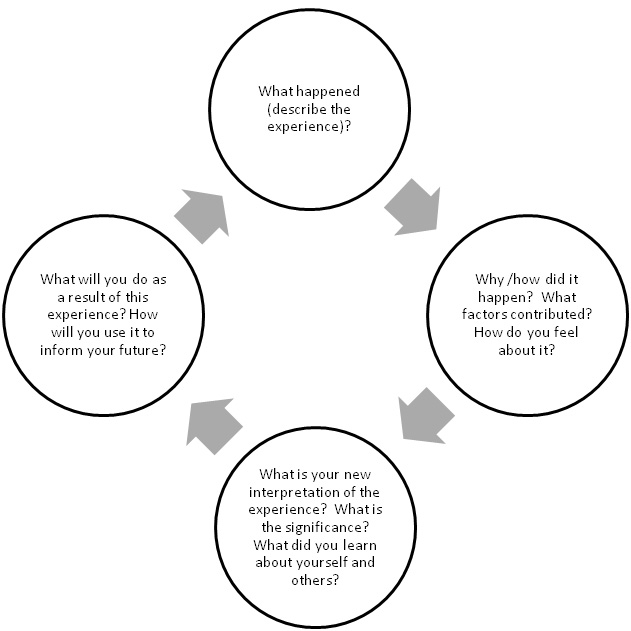
Raewyn Tudor from Ara presents on developing critical thinking, critical reflection competencies with social work students. Prepares student for role of social workers to challenge assumptions and social structures that discriminate and oppress and bring around meaningful personal and social change. Offered definition of critical reflection as a purposeful activity for considering and making changes, improvements to practice, knowledge and meanings. Introduced Stephen Brookfield's critical reflection model. Described how this is achieved through group projects and how assessed. Collaborative teaching requires high capability so PD essential. Shared learning of tutors from the process. 

Last up, Steve Tomsett from Ara on flipped classrooms as deployed helping engineering students learning concepts which are maths based. Provided background on the evolution of his current practice. Explained how flip learning should work and shared what worked and what did not work. Summarised the reflective process of Lines and dots. Line was the wider context and dots are the essential mechanics required to be learnt to progress in class. Dots are provided before class. Lines then take place to apply the dots into the context. Not just the maths but adding the why into the how. Able to use extra time to carry out authentic data collection and analysis to apply the concepts learnt. teL only useful to add value and enrich. 

In the other stream on school to tertiary transition. We have Katrina Fisher and Silvia Santos from Ara presenting as well. Katrina on 'learning barista skills through on-line learning' and Silvia with 'using tablets to assist with maths skills'. 

Dr. Peter Coolbear, Ako Aotearoa Director, closes a busy but well attended event. Peter reminded us internationally tertiary education is in flux. Changes in technology mean learning no longer has to be anchored in institutions. Cost wall being hit with regards to massification of education. Cost constrains now need to be rethought. Diversity of learners increased. Social expectations and returns on tertiary education also shifting. Tertiary education still needs to meet the needs of the future with uncertain parameters. Provided background on rationale for return on investment on tertiary education. D

Lots of variety in the presentation this afternoon but also commonalities between what constitutes good teaching to encourage learning. Active, authentic, constructive, collaborative. 

Wednesday, June 01, 2016

A practical guide to craftsmanship

Disclaimer, I am cited in this report.

From the prolific pens of Professor Bill Lucas and Dr. Ellen Spenser comes another piece of work commissioned by City and Guilds. This piece of work, focuses on craftsmanship. The website provides a link to the short (33 pages) final report. This report follows on from previous work on how to teach vocational education  which I summarised on this blog a couple of years ago and a more recent report on 'remaking apprenticeship' also commissioned by City and Guilds.

The report begins with an overview of the historical connotations of 'craftsmanship', arguing for whether it is appropriate in contemporary times and whether aspects of being a craftsman springs from expertise or attitude. In short, craftsmanship need not be limited to trade or manual occupations. As per Sennett, (see this blog for summary of the book 'the craftsman'), craftsmanship is an innate human desire to 'do things well'. So craftmanship aspects are desirable in the creative arts, computer programming (notice how many books there are out there on the craft of coding), teaching, health care etc. (see my article on how workplace culture impinges on how apprentices attain craftsmanship traits for discussion on craftsmanship and another on the learning of judgment)

The report is written chiefly for a UK audience - as per the sub-title - creating the craftsmen and women that Britain needs - so the two case studies used may resonate more with an anglo audiences.

The real gem within the report is the section on the pedagogy of craftsmanship - starting on page 11. Here the philosophies (signature dispositions, visible learning), the 3 strands of craftsmanship (learnability, becoming and culture) and challenges and presented and discussed.

Signature dispositions are a slant on signature disciplines - something perhaps still difficult to quantify due to the diversity of contexts in which craftsmanship traits are valued and promoted. An example I often use is from 2011 my study with apprentices in NZ. Glazing apprentices complete their apprenticeship in three distinct work organisations. Domestic glaziers install and fix windows in small buildings, commercial glaziers work with construction companies to install large windows in large buildings often using cranes and abseiling skills, and auto glaziers install vehicle windows. Each is a glazier but with a diverse range of skills pertinent to their work. 

Visible learning is based on the work of Hattie (see this blog for summaries on visible learning for teachers and visible learning and the science of how we learn) - for me, an extension of some of the precepts of cognitive apprenticeship.(see post applying to mobile learning) and aspects of deliberate practice (see summaries from this blog of books 2006, 2009 and critiques).

The table on page 15 provides a good overview of the report's direction, linking the desirable outcome of craftsmanship with the two philosophies of teaching (signature dispositions and visible learning) to dispositions (developing the techniques of persisting, envisioning, expressing, observing, reflecting, risk-taking, and understanding the domain). In turn, connected to the three strands (learnable, becoming and culture) to techniques for teachers. Each of the items in the three strands then discussed with examples and some guidelines.

Page 28 provides recommendations to vocational education teachers on how to go about 'changing your own approach'.

The report than concludes by returning to the discussion on the term 'craftsman' - should it be retained or an alternative sought?

Two pages of pertinent references provide a source for further exploration,

In all, a readable report pitched at practitioners that does not shy away from providing citations to support the concept. The synergy of approaches shown to work in the compulsory school sector and the requirements of industry is one of the strengths of the report. 


Monday, May 30, 2016

world class education - NZ documentary

Probably required viewing for anyone in NZ who works in education or is a parent trying to understand the complexities of the educational system. The documentary - World Class - Inside NZ education : A special report fronted by Bryan Bruce  - provides for much food for thought.

In a short 45 minutes, the various initiatives undertaken by successive NZ governments though the last 30 plus years is overviewed and discussed. Comparisons to countries  / cities (Finland, Shanghai) successfully featured as 'world class' as per testing regimes like PISA are trotted out.

Usual reviews were usually positive in the NZ media via stuff - summary,  'does not disappoint' , and opinion piece. In short, there is call - supported by much research - for early (pre-school) learning to be better supported and for parent 'education' / support where needed. As a child learns much in the first years of life, parents as 'first teachers' are an essential component of any 'educational outcome'. Given NZ's rising disparity between the haves and the have nots, there is mounting need to support those who struggle. Otherwise, the gap between the educational outcomes of the better off and the less better off, will be always difficult to bridge.

One interesting comment struck me as worth thinking through. An American academic urged NZ to NOT be focused on tests scores (ie. PISA and similar). His question was apt. Why should a small country like NZ, concentrate on producing learners who could just 'pass tests'. Surely, it is more important to ensure a small country like NZ, prepares future citizens to be ready for the future. To be creative, innovative, thinkers who lead the world, not drones to work in repetitive, mechanised and conformist organisations.

Ditto therefore relevant to the vocational education sector. We currently have a very important mechanism for changing the focus of voc, ed, in NZ. The NZQA targeted review of all qualifications in NZ has shifted qualifications from emphasis on 'unit standards' and a rational (quantitatively) approach to delivery and assessment of vocational skills to graduate profiles. In this article, I argue for leveraging off the opportunity provided by a shift to graduate profiles, to recognise more relationally (qualitatively), the skills, knowledge and attitudinal voc. ed. attainment through concepts like 'becoming' - as per occupational identity formation which formed part of my PhD thesis.

Much work still be be done to shift industry training and pre-trade / on-going voc. ed, through polytechnics and institutes of technology (NZ ITPs). However, the opportunity has now be provided and it is up to the 'users' to make the most of it.

Monday, May 23, 2016

The Conversation - Australian forum for academics

While at the AVETRA conference a month ago, one of the websites that came up in a workshop session at use of social media by researchers / academics, was ‘The Conversation’. This website provides a academics to put up op-ed type articles on a range of topics including Arts and culture, business and economy, education, environment and energy, health and medicine, politics and society, science and technology etc.

There are version so of "The conversation for Australia, Africa, France, UK and the US of A. Becoming an author requires registration.

A browse of the education section reveals a few nuggets, including this article by Megan O'Connell and Bill Lucas on 'young people designing their own learning'. Generally, most articles appeal to a wide audience, hence articles relevant to the compulsory education sector and around Australian funding / policies.

A few vocational education focused articles usually on topical issues, sometimes in ‘reply’ to try to shift perspectives reported in the popular media. Examples include:


Damien Oliver and Serena Yu summary of a recent NCVER report on relevancy of voc. ed.

So, another site to add to my 'favourites' / alerts as it provides commentary on socio-political forces which shape voc. ed. 

Monday, May 16, 2016

Maker Culture - some thoughts

Compulsory sector education has been promoting the adoption of 'maker culture' in schools. In NZ, one of the top ten trends noted is the rise of maker culture. The trend has come about through the advent of cheaper and more user friendly 3D printers - see inventables for examples.

Currently extends also to:
-  learning through 'mechatronics' (e.g. lego robotics), 
- the rise of learning coding at primary school - see UK example and theatlantic for a discussion on relevance or non-relevance to school 

However, as lamentated relatively recently by Matthew Crawford in his book - Shop class as Soulcraft - the work of the 'trades' already epitomises the 'maker culture'! See good overview / review by the new atlantis and my book summary  Ditto from the work of Mike Rose - with his book - the mind at work - book summary on blog.

Some acknowledgement within the educational sector of the need for academic learning to be extended through 'working with our hands' is better than none at all. So in a way, the maker culture, albeit with a 'tech' slant, is still a good thing. However, as with all 'trends', important to weigh up the pros and cons and work out what the overall learning objective.

The rise of maker culture, arose outside of the educational sector - see time for overview. In many parts of the world, 'maker culture' has always existed. In the post-industrial West, there is a revival in an appreciation of the skills required in manufacturing. retired tradesmen and hobbyist set up shared machine shops to craft machinery parts of trains, cars, planes etc. being restored as the parts are no longer manufactured. With baby boomers retiring, there is also an increase in 'men's sheds' and the female equivalents in the crafts. My' elderly' friends who belong to craft groups - knitting, crochet, quilting etc. tell me of younger women in their twenties, attracted to the crafts to fulfill the needs of 'being able to make things'. Many of these youngsters have not had the opportunity to learn crafts at school - concentrated on academic objectives. 

Making is therefore something innate in us humans. How to bring the many ways to 'make' into a cohesive objective, usefully integrated into the already crammed school curriculum, will always be a challenge. Trades still need greater visibility, not just as an alternative to academic learning, but as an integral part of being human. To be able to not only conceptualise but to also make.


Monday, May 09, 2016

The Collaborative Economy - Channel NewsAsia TV series

Happened on this series of documentaries as I check in on  Asian news through Channel New Asia website about once a week. Also do a similar thing with European / World news via BBC.

The series 'New World without Strangers' is hosted by Henry Golding and now on to the fifth episode.

The first episode focused on home sharing, featuring AirBnb with hosts in China, Singapore and South Korea. The following episodes involve ride sharing (Uber), sharing items (peer to peer renting - rent tycoons), meal sharing (meetup ; zipbob; bonappetour) and sharing with the community.

So what about the educaitonal sector. A quick google search reveals peer - peer learning platforms including tribelearn and P2PU with inklings for a host of startups. Traditional LMS with their ubiquitous 'discussion forums' also provide the tools for peer to peer learning.

What makes education different from the rest of the 'collaborative' economy? Learning can be thought of as an asset as well. Peer learning has always been advocated as an effective method to assist with learning - for example see the work of Hattie and Timperley on feedback.
Language learning comes to mind - the nextweb provide a blog summarising 8 tools for language learning includes a couple of tools to learn with and from others.
Also many of the DYI sites - like this one on cake decorating - sprout facebook sites to allow the learners to clarify their learning as it proceeds, providing Just in time assistance as and when required.

The maker culture (see Core Ed for NZ educational perspective) and growth of maker spaces (see NZ example) have also firmed up with a journal bringing the study of collaboration within this evolving culture into academic inquiry.

Therefore, need to keep in touch with this area of as there are contributions to how educators think of learning and it's provision. When learning is individually self-driven, there are platforms and tools now which will assist with the gaining of skills and knowledge without recourse to stepping into or enrolling into a formal programme. How can educational institutes, still very much in the 'gate-keeping' and awarding of qualifications mode adapt?


Monday, May 02, 2016

Jane Hart's top ten tools

Doing a catch up on elearning and Jane Hart's Top 10 tools for 2015 always a good place to start. The annual guidebook provides a summary of each tool.

Tools are now categorised into Instructional tools, content tools, social tools and personal tools. As always, some overlaps but the categorisation does assist with selection when we (as ed. developers) recommend tools to teaching staff.

Instructional tools include MOOC platforms - which includes Khan Academy, course management tools, course authoring tools  and quizzing, survey and data collection tools.

Content tools include ones to sue to develop presentations, animations, edit videos, screen cast, screen capture, graphics and infographics, photo/imaging tools, audio tools, documentation and spreadsheetis.

Social tools include webinar, live event interaction, team collaboration, file sharing, blogging and website tools, public social networks and enterprise social platforms.

Personal tools include search / research, email clinet,s messaging tools, social bookmarking, notetaking, web browsers, personal readers, other personal productivity tools and devises and apps.

I think the categorisation is comprehensive enough to sort the range of tools now available on what used to be known as Web 2.0.  Many tools have survived over the last 1/2 a decade and even Microsoft has got on board with the launch of Office mix and Sway into their suite of 'tools'. Also of interest, the rise of alternatives to Moodle, including Canvas and Edmodo.

Wednesday, April 27, 2016

ARA Institute of Technology - Staff day 2016


Ara Institute ofCanterbury was formed at the beginning of 2016 through merger of Christchurch Polytechnic Institute of Canterbury (CPIT) and Aoraki Polytechnic. The name Ara was’ selected to reflect one of the objectives of the institute, to be a pathway for learners into initial work and continually beyond the attainment of the first tertiary initial qualification.

Today, the first staff day for Ara begins at 10am to allow all staff to travel to Christchurch from South Canterbury for the event.

The programme begins with the new Ara promotional video showcasing the Canterbury landscape followed by inspiring Te Reo welcome from Hemi Hoskins, HOD for Humanities. The chanting of Ara waiata is then completed. The MC John West who is Ara project director for organisational transformation follows with welcome, housekeeping and overview of the day’s objectives. An icebreaker activity to get to know each other in our assigned tables start off a busy day.
Jenn Bestwick, Chair of the Ara council and Kay Giles, Ara CE than officially begin the day with ‘a call to action’ and the viewing of a video ‘Ara – the Future starts now’. Jenn welcomed staff, now standing at 1100 permanent staff. She set the scene by providing background on formation of Ara, the two councils’ work on forming a shared agenda and some ideas for the way ahead. Importantly, advocated the need to embrace change and continual improvement to ensure our learners’ educational outcomes are met. Kay spoke on transforming tertiary education in the Canterbury region. She presented on background to assist with the thinking to contribute to the Ara strategic plan. We are about to complete transitional stage and move into the transformational stage (to June 2018) before we shift into a consolidation stage to end in 2020. Provided rationale of Ara vision and unpacked strategies identified to inform Ara going into the future. Provided list of transformation focus areas. Introduced Ara Te Kahui Manukura, the leadership team. Detailed the expectations for staff to engage with the transformational agenda – to understand Ara vision, provide input to strategic plan, consider the resources and capabilities required and start to plan actions that will take us there. Video of stakeholders from industry, community, local government and students providing views of Ara’s future trajectory. Strong call to assist with regional capability building through access to learning beyond the main Canterbury centres, for people who need upskilling while still at work. Byline – the future is everywhere.

Group work begins with group activity to provide suggestions and input into the drawing up of the new Ara strategic plan. The brief is to reflect on the challenges and opportunities of the future and for participants to use their imaginations and come up with creative ideas to contribute to the strategic plan. We are asked to pick two dimensions from customers, products, processes, engagement, capabilities and sustainability; think about and discuss and use some questions provided to come up with suggestions.

After lunch, an item from the Court Theatre Jesters to get thing moving along into the afternoon.

Then, Diana Law, Manager for Student Well-being introduces another group activity to work on Ara guiding principles. Here the activity is to think of three words that symbolise the principles, values, qualities and behaviours which will underpin our practice and ensure successful implementation of the strategic plan. Our group discuss various approaches and settle on aspire, relate and advance – to assist students to reach their aspirations through valuing relationships with them, industry and the community with the ultimate goal of advancing students’ capabilities.

Ara awards for 2015 are the presented for excellence in teaching in 5 categories with 2 winners in each:
New to teaching: Bernadette Muir and Kylie Short
Excellence in teaching through collaborative practice: Wendy Clarke
Excellence in teaching through integration of technology: Sue Deuchar, Mandy Gould and Steve Tomsett
Leadership in teaching and learning: Lee Ann Powell, Raewyn Tudor

Also organisational awards in the following:
Great Leader: Susan Woods
Star Player: Leonie Rasmussen
Team Player: Rimi Ellis and Marion Peawini
Sustainability: Pacific trades for Christchurch pilot project (Villi Burrow, Mick Cooke, John Kerrigan with David Dixon and Mark Hamilton)
Congratulations to all.

Friday, April 22, 2016

AVETRA day two

AVETRA 2016 day 2

Day begins with keynote from Associate Professor Ruth Schubert who is associate director from LH Martin Institute, with presents on quality teaching in VET. Contents teaching as a skill / craft needs to be taught. Quality teaching is therefore requires support and should be founded on good teacher development. Provided Australian background and summarised June 2015 report on investigating quality teaching in the Victoria VET sector. Evaluated a range of national and international frameworks and decided to develop customised framework focused on teaching and assessments. John Hatties' visible learning principles also integrated. Draft report with Department of Education and a preview of 12 capabilities contributing to the framework. 

Two concurrent sessions follow.
I select to attend one on achieving agreement on competence: collaboration in assessment of apprentice performance with Berwyn Clayton from Victoria University. Reported on work undertaken in 2 NCVER funded projects in competency progression and completion : how is apprenticeship in three trades ( 2015) and industry currency and professional obsolescence : and what can industry tell us (2013). Found connects and disconnects between teachers, workplace supervisors and apprentices with each having different views on what is required, what roles each plays, the language of training and assessment and expectations. Recommendations include developing shared understanding and maintaining open and ongoing communication about training, assessment and decisions. 

Then with Susanne Francisco from University of Technology Sydney on work based learning of novice VET teachers : creating a trellis of learning practices one of the outcomes from her PhD. Provided rationale of topic and covered the theory underpinning model. How, what they learn. Used Kemmis et al (2014) practice architectures on cultural discursive arrangements, material economic arrangements and social political arrangements. Studied relations around the practice that supports learning (PSL).  Connections or divergences can be drawn up to form trellis of practice to reveal which areas require greater support. Nodes include using well prepared resources, interacting with colleagues, informal mentoring, interacting over smoko, team teaching, co-teaching, collaboratively developing assessments or materials, etc. visual of the trellis useful in unravelling the complex nature of learning how to teach by teaching. 

Following are three workshops on research to select from. I attend one presented by Chris Corbel, Leo Gregorc and Kira Clarke on research into multichannel outputs. The workshop focused on how to disseminate research in scholarly, opinion and social media platforms. Need to establish where you want your work to have impact? Channels are scholarly, practice based, public and social media. Work shopped how can social media support dissemination, op-Eds and pitching and scholarly outputs for your thesis. 
Leo presented on Using social media to develop a personal learning network. Design a PLN to suit your needs. Many tools but which one to select? Check out using social media to share research. Hoot suite as a social media dashboard allows syndication of news across your social media platforms. 
Kira workshopped commentary and translating your research into op-ed. (the conversation) to reach practitioners and policy makers. Perhaps target publication you currently read and learn how genre written to prepare. Try to have one page and one idea per paragraph with one concept across entire article. Workshopped In pairs to write a pitch for an article. Encouraged to write proactively and bear in mind you are writing for a lay audience. Use op-ed to promote forthcoming publication or to curate available data. Final statement must reinforce your message and if online, put strong statement just above social media button. 
Chris covered scholarly outlets for disseminating post thesis research. 

After lunch I present on using video to assist with the learning of the sociomaterial aspects of trades work. Covered learning a trade through individual constructivist learning, sociocultural relationships and interaction with the materials, tools, machines etc. AND how videos may assist and their pros and cons. 

A panel convened to discuss putting Vet research to work: motive means and opportunity. panel convened by Hugh Guthrie and panel of Megan Lilly, Peter Hurley, Michelle Circelli, Michele Simons, Peter Noonan, George Mykonos and Robin Shreeve. Began with establishing definition of VET research and meandered through perspectives on what Putting research to work, means. 

Conference closes late afternoon with possibility of next conference being hosted in Melbourne.  

Thursday, April 21, 2016

AVETRA 2016 Day 1 afternoon

After lunch, Keynote with Chris Robinson who is Chief Commissioner on quality in the VET sector with specific reference and perspective from the regulator, Australian Skills Quality Authority, ASQA. Reassurance as to overall effectiveness of VET but media tends to pick on bad news stories. over 85% satisfied from students and employers over many years. Only 10% of training organisations have had accreditation cancelled since 2011. Applications to set up RTO have 15% refused and 6% refused re-registration. Assessments seem to turn up almost all the time when RTos are non-compliant. 

Fourth keynote of day with Dr. Damian Oliver with Employers' understanding the role of qualifications: the search for evidence. Used a range of tools. Employer surveys to find out why qualifications used and which ones. Document survey of awards for connections between qualifications, job roles and pay rates. For occupations without awards, analysed enterprise agreements. Student / graduate views from graduate surveys on whether quals. Needed. Relationships between VET enrolments and immigration patterns. From employers NCVER survey, 1/3 have jobs requiring quals. Usually due to legislative or licensing requirements, maintain professional standards and skills required for work And 3/4 satisfied with Voc. Quals. (2005 - 2015). Covered limitations from using surveys and why document study may reveal behaviours rather than attitudes. For awards, 1/3 had no reference to qual. 1/3 had one classification and most fall in between across 122 awards. Similar proportions in enterprise agreements studied. From migration stats, no consistent relationship between skills immigrating into Australia and completion rates from VET. 

Short session from Anne Szadura from Australian Council of Dean's in Education on function of the organisation. 

Short speed dating sessions follow with short 5 minute presentations across 30 minutes. Topics include: VET leadership training through public value theory with Jill Hadley from University of South Australia, Gary Balderson and William Blayney from Central Queensland University on point of sale training voucher hand held tools, Anne Bowden from TAFE NSW on reflective research, Ruth Walker from Independent Assessment Validation on validation and quality, and Leo Gregrkc fro VET Development Centre on  7 virtues of elearning design. 

After afternoon tea, I attend Dr. Melinda Waters From TAFE Directors Australia presentation on unravelling the innovation paradox in VET. Defined paradox as the intersection between two or more antagonistic sets. Australian VET has policy for VET to be central to economic development but practice is about meeting regulatory requirements and founded on competency based education / training. To unpack, drew on McGregor-Wise (2009) the received, contextual and articulated view. Used these three to explain teaching / learning and innovation. E.g. Received = behaviourist or cognitivist, innovation is linear ; contextual = constructivist, innovation is social process; articulated = rhizome learning, innovation is process of translation, multiple articulation and emergent. 4 studies using articulated view found teaching practice to be messy, politicised, relational and non linear. Innovative work is therefore spatial boundary work, affective work balancing work and had critical practices. 

Then with Dr. Steven Hodge and Dr. Ray Smith from Griffith continue theme of innovation with paper on conceptions of innovation among VET staff, students and placement host staff. Reported on phase 1 of a NCVER project on the contribution of student placement process to innovation in host firms. Lots of validation of WIL working well for students but less on impact on firms. There is recent mid 2000s literature on knowledge and technology diffusion with VET serving as vehicle to bring high levels of skill, knowledge and technology to firms (Pickerskill & Edwards, 2005; Toner, 2007). Defined innovation as the development, introduction or implementation of signficantly improved good, services or processes. Findings summarised from f2f semi structured interviews with 13 employers, 10 RTO staff and 7 students. Distilled conceptions of innovation as difference is valued, ceaseless striving, harder, better, faster, stronger - improvements are measurable, imagination and thinking part of the process, market orientation and integrated / cooperative collaborative effort. Considerations on innovation include sites, source, orientation, realisation, substantiation and distinction.  

AVETRA AGM and conference dinner close a very busy day. 

AVETRA conference Day 1 morning

AVEtRA 2016
Day one morning

At the annual AVETRA conference over the next couple of days. 

Day begins with a welcome to country from Uncle Ray Davidson who provided an overview of the area and conference opening from AVETRA president Michelle Simon providing background and setting the scene for newbies to the conference.

First two keynotes start off the conference, setting the scene for the themes - putting VET research to work. Firstly, Professor Joe Lo Bianca from University of Melbourne presents on - collective writing of language and literacy policy, initiatives in peace building in SE Asia. Aim of the presentation is the link between inter generational social capital and outcomes and role of social cohesion, social capital, inclusion and social mobility in establishing a way forward. Summary of 2012 report on social cohesion. Presented two cases, Myanmar and Thailand. Presented collaborative research on sustainable peace building , recognition, representation. Reconciliation and redistribution. With recognition and representation as drivers of conflict and reconciliation and redistribution as legacies. Provided examples of educational intervention in each peace building phase. Very interesting approach used in Myanmar from 2013 on 'writing' the policies to help country move forward in rebuilding access and system of education. Based on shared 'constitution' to write policy based on models from other countries, structured process, shared ideology and priorities. Reports at unicef

Second keynote from Peter Noonan from Mitchell Institute Victoria University on investment in VET, past present and future. Part of a series on tertiary education financing - http:// www.mitchellinstitute.org.au/reports purpose of paper to establish fact and information base on VET funding system, issues with VET shared funding model, current state of play and future options. Australian centric with some learning for NZ context. 

After morning tea, concurrent sessions begin. I attend session in apprenticeship stream with Dr, Don Zoellner from Charles Darwin on fixing problematic apprentice systems, never a clean slate. Used Foucault as base for interpretation. Shortcomings of apprenticeships via recent study by Wolf 2015 and NCVER. Include mismatch between funding and labour market needs, dominated by major vested interests, public payments to providers, decrease in apprenticeship, increase in age of apprentices, misconceived Voc ed policies. Explored why although UK and Australia similar as per the two reports, both countries have evolved different systems. Propose historical and political realities as cause. Recommends 'new public management' system where path dependency determines who sits where depending on policy / programme decisions / power. Introduce training market and provider choice, wider number of apprenticeships, continual tinkering on who pays. 

Then, with Dr. Steven Hodge and Dr. Tim Mavin from Griffith and Dr. Suzanne Kearns from University of Waterloo in Canada on differentiating the relevance of CBT to occupations in the aviation industry. Competency based Education in Aviation recent book published. A range of occupations with some deemed to be more suitable for CBT. Why some and not all, and why these occupations? Some occupations e.g. Pilot training mandated by international agreements and standards through International Civil Aviation Organisation. CBT CBE tends to be 'accepted' as the method but no research on effectiveness. Research study interviewed all occupations globally. Proposed study of complexity of tasks and to evaluate if CBE suitable. Tipping point when competency not possible to be detailed. Implications to VET of Competency standards not suiting all occupations, qualifications and levels. 

Next up, Professor Sarojni Choy, from Griffith with Dr. Christina Hong and Dr. Anna Daniels TAFE Queensland on a critical participatory action research framework to improve VET practice. Used a model used with teachers to introduce CPAR to VeT teachers. Needed to adjust to allow for complexities and challenges related to VET teaching. Case example of work integrated using CPAR for a renewal, appraisal and change project. Goal to change social practise by changing what stakeholders thought, practitioners did and results expected. Build an understanding about how things are done, and influence on the thinking, saying, doing and relating. Anna provided example of deploying tablets  - iPads and iTunesU into blended learning English learning context. Reports from projects on TAFE Queensland site. 

Then, Dr. George Myconis, Stephanie Yung and Luke Swain from Brotherhood of St. Lawrence on factors enabling entry into and engagement with VET for young, early school leavers. Reported on preliminary findings from Queensland, Victoria and Tasmania. Centered on finding out young people's experiences from intention to enrol, through to level engagement and completion. Used an alternative approach that Views engagement as part of a dynamic process and explores micro and macro factors. Framework used via family support sector - McCurdy and Daro, 2001. How Individual, provide, programme and neighbour factors impinge on intent to enrol, enrolment and retention. Individual factors more importNt at enrolment but programme and family more significant in retention. Decision making process detailed based on Bandura,s social cognitive theory and Ajzen 1991 theory of planned behaviour. Factors include self efficacy and cost benefits. From these, key themes for each factor drawn up and survey questions developed for intermediaries and young people. 

A busy morning with many items to work through. A few to follow up with regards to present and future work. 

Monday, April 11, 2016

Nature of work - now and into the future

As a follow on from posts over the last month, here is another viewpoint - from American sources of the future of work from knowledgeworks. An overview of knowledgeworks details their objective, to assist school and communities by providing innovative tools, training and assistance to prepare students for the future. The knowledgeworks take on future of education is summarised in their 'exploring the future education workforce' report. Knowledgeworks is also connected to vibranted which connects institutions to educators. The list of jobs and their descriptions currently advertised, makes for interesting reading. Jobs include micro-credential analyst, pop-up reality producer, data steward, competency tracker, social innovation portfolio director, learning pathway designer, learning journey mentor, learning naturalist.

There has been a great deal of ink used to argue the point of preparing students for the future. Some countries mandate introduction of 'coding' into the school curriculum. The way things are going, computers should be able to write programmes to control themselves in the not too distant future. What we need are not coders, but people who can 'read' code, see implications to humanity and modify. So we need people who are creative, with strong ethical foundations and a BROAD education to be able to see the socio-economical-political implications of their actions. There may therefore be 'less' work but the work will be more challenging. Ensuring education assists to prepare everyone for the future is therefore now, even more important. There is space for 'specialist' technical skills but also need for people who 'manage' to be able to solve problems as 'critical thinkers' with a social conscience.

Monday, April 04, 2016

Changing nature of work

As a follow up from the last post, I have summarised some of the NZ links / articles coming out of the Labour Party conference on the Future of Work. A range of options and discussion papers is on the site along with one focused on impacts to education with a case study from Denmark included. The NZ media have latched on to one option - that of a Universal Basic Income for all NZers. There is a supportive article in the Huffington Post providing international background to the UBI. A counter is recorded in the local media from Labour Leader on UBI shows tentative exploration at this stage, so not something to become too excited about yet.

There are some 'repeats' of various policies / discussions from the now disbanded Department of Labour report to the Goverment - 2008 report.

Suffice to say, the above is response to the growing number of opinions reporting the risks to current jobs through computerisation and technology. NZ context reflected in this article starting 46% of present NZ jobs threatened by 'robots'.

As educators, there is an need to find the balance between providing learners with 'generic skills' - some yet to be identified / defined, and the need to provide vocational education to prepare learners for a range of increasingly context-specific and specialised / skilled occupations. We really need to do some work towards 'signature pedagogies' which also prepare learners to be 'flexible'.


Monday, March 21, 2016

Why we work

Recent 'discussion papers' and various fora in NZ have been discussing the 'future of work'. Left and Central left viewpoints via the Labour Party and the Tertiary Education Union, provide access to the Productivity Commission's investigation on the role of tertiary education in NZ, published late last year.

As per reports in other countries, e.g. this one from knowledge works, the world of work is now one of continual change. Workers of today will expect to shift jobs and careers several times during their life times.

This TedTalk by Barry Schwartz  asks the question 'why do we work'? and the reasons for the importance of 'rethinking work'. Work is not just to earn a wage, for many, it is also a source of fulfilment. Workers often 'go that extra mile' not because there will be a financial reward, but to make their work more fulfilling and to meet individual's intrinsic motivation. Companies who put emphasis on nurturing their human resource, obtain returns in outputs.

Slightly longer version of Schwartz's work is in the book, with overview at brainpickings.

In NZ, the Productivity review 'issues' section is now open for submissions. An 'issues paper' detailing the context / background and various possible 'models' for tertiary education in NZ. Tertiary education providers in NZ include universities, polytechnics (ITPs), Wananga (Maori tertiary), provider providers and adult and community ed. (ACE). Provision for this large sector has always been a challenge. In short, the government is seeking better return on investment for the $$ put into the system. There is also the mandate to improve outcomes for all NZers regardless of ethnicity and social capital. Some of the 'models' put forward as examples in Chapter 5 (new models) make for interesting reading and critique. Chapter 6, proposing a range of 'questions' for submission, poses a range of interesting options. As with large shifts in public funded education in the past, NZ does not shy away from asking the hard questions. How things eventually workout, will impact on the future career prospects of a generation of NZers. Therefore, important for all in the sector to respond, bearing in mind the global / international changes bearing down on the world of work. How do we assist our students to meet the challenges of the future of work?


Monday, March 14, 2016

Using Sway

Sway is microsoft's free, online, presentation and storytelling app. I have been dipping in and out of it and the concept holds promises for enabling our staff and students to put together short presentations.

Several examples are showcased on the sway site, including this one on the future of education, and this one with examples for teachers. So education is one of the areas, the developing team have targeted as users of sway. Microsoft blogs indicate the trend with this one on using sway as a case study in education and another on teaching math with sway.

Also examples from ethos3 as a comparison between other presentation apps and mieexpert archiving various sway features and resources.

A few critiques / reviews from teacher with this one from the Australian teachers' blog and another which includes a tutorial on using sway / office mix from jonathanwhylie.

Looks like sway will be here to stay. Overall, the app is quite user friendly but tends towards a linear structure. So, sway is structured for linear rather than ad hoc storytelling. Along with office mix, sway provides an alternative to powerpoint. Both useful expecially for tutors putting content together for distance students and students to showcase their learning. However, there is a need to ensure story boarding type planning precedes, otherwise, messy presentations lacking coherence are the result :(


Monday, March 07, 2016

Connected learning advisory - NZ

Picked this one up from the NZ Educational Gazette – Tukutuku Korero – the fortnightly publication by the Ministry of Education providing news and updates relevant to the compulsory school sector.

The Connected Learning Advisory – Te Ara Whitiki -  is set up by the NZ Ministry of Ed. to support schools and clusters as they plan for, manage and use TEL. 
There is a god series of guides, including:

decisionmaking guides’ useful for deciding various permutations of providing devises, BYOD and multimedia hardware selection.

Monday, February 29, 2016

GPS Doodling - uses in Vocational Education

This article came up on the Stuff website tweaked my techy muse. The cyclist, Stephen Lund, has been using his bike rides and his GPS to create GPS doodles. Stephen presented at Tedx and archives his doodles on strava. In the course of a year (20150, he has accomplished 70 doodles!! All completed through cycling around his home city of Vancouver.

There is a creative aspect to GPS doodling, but also a great deal of planning to plot the route before executing the ride. The uses of similar technology in education are numerous. Students, on field trips' could undertake similar trips, either as plotted on the GPS by their tutor, or to create their own 'piece of art'. Learning outcomes include important practicing of spacial skills and learning is made all the more powerful when authentic examples are availed through GPS guided field trips.

Will now have a chat with tutors who may find the idea useful :)


Monday, February 22, 2016

What' trades learning' and pedagogy can learn from music pedagogy

Came across this via the facebook page I follow intermittently. The page is looked after by the current band master of my school band. 40 plus years since I left school, the band continues it's strong tradition of excellence set by the first band mistress, playing a leading role in nurturing young people through learning  music and the discipline and camaraderie fostered through long hours of practice required to attain excellence.

Thestrad webpage focuses on supporting string players, with good resources on practice, technique, teaching music and collation of articles on repetitive practice and the need for effective practice. All in, a good resource of pragmatic responses to assist the learning of complex skills.

I had a look at other resources for learning music and came across some books including one on piano pedagogy.

At the CPIT library, there is a scholarly book on teaching piano – Teaching performance: a philosophy of piano pedagogy by Swinkin and published by Springer in 2015.

The book provides background (some historical) on approaches to teaching piano. The aims of the book are detailed in the introduction. Chiefly the book undertakes to try to resolve 2 dilemmas. One is to bring to the fore, the difficulty in studying music as language, the other is to push teaching of music beyond the technical, to instill greater intellectual depth, emotional sensitivity and interpretative skill in musicians. Unfortunately, I have yet to find an equivalent for trades pedagogy. So, there is a gap in the literature to be further investigated :)


Monday, February 15, 2016

We have the technology - book overview

Brief overview of the book: We have thetechnology: How biohackers, foodies, physicians, and scientists are transforming human perception, one sense at a time by KaraPlatoni, published 2015 by Basic books.

Generally positive reivews from Kirkusreviews which also provides a list of similar books.

This book is an interesting read. I borrowed the book from the local library and took it along with me on a long weekend / biking holiday. Then did a re-read when I got home as there were snippets throughout the book requiring further attention.

The book’s premise is the challenge the world as we perceive it, through our senses. There are chapters diving deeper into each sense – taste, smell, vision, hearing, touch including the ‘meta sensory’ perceptions of time, pain and emotion. Then 3 consolidating chapters on virtual reality, augmented reality and new senses.

The introduction opens with details of the fringe activity of bio-hackers. People who connect themselves to electrical / digital circuitry to add a new sense (e.g. an embedded compass) or augment a sense. The concept of ‘reading’ what happens in our brains to ‘writing’ what it may be saying, is also introduced. In short, we are on the difficult and complex journey towards being able to unravel the impulses in our brain, and translating them to control exterior devices. Of use, especially for people unable to use their limbs or unable to communicate.
In the chapter on taste, the hunt for ‘another’ taste beyond salty, sweet, sour, bitter and unami is detailed. Scientist postulate there is a ‘fat’ taste, a’calcium’ taste and a taste for ‘fullness’. The idea being that the body will intuitively seek foods which it is missing and through taste, eat foods high in the absent elements. Overall, a really good overview of how we taste and the history of research on finding out how we taste.

The next chapter focuses on smell. In particular, the ways smell brings up memories. The chapter details therapies used with dementia patients. Using significant smells, patients are encouraged to articulate their memories triggered by certain smells. Of note is the cultural / generational significance of certain smells. As will all aspects of life, the smells we are exposed to when we are young, are predicated by our life experiences. 

The vision chapter provides details of attempts to augment vision for people who have lost sight. State of the art therapies are introduced and the long process of developing practical application for theories and the refining of visual prosthetics makes for an interesting read. Various prototypes are described and discussed.

Hearing chapter provides details on the work undertaken to try to ‘read’ how the brain handles language. If ‘reading’ can be worked out, then ‘writing’ to it may also be deduced.

In the chapter on touch, surgeons using ‘robotic’ arms are used to illustrate the role of tactile senses in navigating our world.

The chapter on time is somewhat intriguing. It details the movement towards making a clock, that will measure time for 10,000 years.

The pain chapter undertakes to try to understand if emotional pain is similar to physical pain. Why do we suffer from ‘broken hearts’?

Following on, the chapter on emotion explores the cultural desensitisation in some cultures to expressing emotions. How does each culture ‘feel’? Cross cultural studies are detailed with emphasis on comparing how Eastern and Western cultures 'feel'.

The two chapters on virtual reality and augmented reality detail the latest research into these areas. Examples are provided of how virtual / augmented reality has been used to assist American troops with pre-preparation for the realities of overseas postings into stressful environments or to assist with recuperation from post-traumatic stress following deployment.

The final chapter is on ‘new senses’, returning the book’s trajectory to where it started at the beginning. The example used is the inclusion of ‘electro-magnetic’ detection into human sensations portfolio.

It might be some time before any of the above technologies infiltrate the educational sector. The challenge is the cost of developing these technologies and the context specificity of much of human learning. Virtual reality and augmented reality have been around for over a decade, but what we have seems to be only small applications into education. As with other innovative technologies, the research and development dollars are in the commercial, health and military sectors. Slowly, the technologies filter to education which tends to not have the R & D $$ to support large scale and expensive developments. Granted R & D takes place in the university sector, often building prototypes useful for learning as a by-product of applications for other sectors. However, some way yet for VR and AR to become mainstream in all sectors of education.


Tuesday, February 09, 2016

Peeragogy

Thinking through as to a direction for project surface tablet. One of the main ‘success’areas with tablets has been the use of the tablets to take videos of students learning practical skills or learning dispositions through roleplay. Included is the aspect of peer learning and feedback. So students use the videos as a springboard for learning not only the skills or dispositions but important aspects of judgment required to maintain reflective practice.

This bookon peeragogy, via a 2013 posting on Arlington Education Foundation referring to a holistic approach to technology enhanced learning, provides some suggestions for ways forward with regards to enhancing learning through peer learning. Although set in formal school contexts, the ideas and discussions are transferable across to vocational education.

The online book is basically a collection of ideas / resources from various American teachers who seek to improve learning through implementation of peer learning and peer production. It’s the peer production part which we really need to move along with.

So, instead of providing feedback etc. the next step is to perhaps have students develop a how to ‘guide’, using their original videos as source material. The ideas included in the book are ways to organise student groups, activities suitable, organising learning context, assessment suggestions etc. Technology tools suitable like forums, wikis, real-time meetings, MOOCs etc are discussed.


I will try out a few of the ideas with our project tablet teams, to extend on what we have begun and to continue to improve on our learning-centred approaches as supported by introducing ‘situated technology enhanced learning STEL’.

Monday, February 01, 2016

Using Sway

Sway is a microsoft free online presentation and storytelling app. I had a play last here when it first came up and found it quite user friendly. Since then, the sway team have been busy putting up examples and the examples offered are now more varied and interesting.

Although not the best example (it is structured as a scroll down) the content in this sway on the future of education is thought provoking.

Resources are now up for educators in the form of a sway, plus microsoft office has resources here and here as well providing examples for use of sway.

There is a positive review from Australian teachers blog and  jonathanwylie has a tutorial with examples.

In my own context, sway represents an opportunity to showcase ones work or for students to compile multimedia content. Sway is generally easy to use and hows promise but requires time to learn. As with other presentation tools, it is important to 'storyboard' before embarking on forming the resource.

Monday, January 25, 2016

Future of learning - schools and unschooling - impact on post-school / tertiary

While in Perth, also did a bit of reading around what the school sector is coming up with with regards to 'the future of schooling'.

Teachthought provides one perspective with 13 likely realities for the future of learning.   Included are the usual suspects of personalised learning through access to information via the WWW and the impact of the 'maker movement'.

Also, form teachthought, articles on ways technology will change education and the caveat of putting curriculum before technology.

All the above provide a good overview of what thought leaders are thinking with regards to the schools sector.

Meanwhile, in the world of work, sites like knowledge works provide articles on the uncertainty of work. Some congruence between the two sites. Tertiary learning is therefore the connecting systems between formal schooling and the future of work.

There is a need to prepare ALL for a world of continuous change. In some forms of work, there may be less change in the actual work (e.g. craft / trades) but the impact of social-political changes forces the work to refocus. For example, a carpenter still needs the skills, knowledge and dispositions of being a craftsperson BUT the ways in which the business of carpentry is conducted, will shift. There will be economic pressures to adjust to through ways materials are sourced. Technological changes in how the carpenter interacts with 'head office'. New requirements set by legislative changes and the need to be more sustainable in using materials and in building design. Therefore, important to sift out what ACTUAL impacts there might be so the curriculum to train, shifts with time.

Of interest, for instance is this book chapter by Trevor Marchand which came through my Google scholar alerts this morning. The chapter ' managing pleasurable pursuits: utopic horizons and the arts of ignoring and 'not knowing; among fine woodworkers in the 2015 book 'regimes of ignorance' - chapter one available for overview. In Marchand's book chapter, the idealistic direction of aspiring woodworkers is tempered as they progress through their two year programme. Many of the students are 'vocational migrants' - mature students who intend to 'retrain' into, perhaps, more fulfilling work - (as per Crawford's shop class as soul craft intentions). Marchand's woodcraft student interviewees appreciate the thorough grounding they are being provided with through the programme at the Building Crafts College (BCC). However, they intimate that some 'management of small business' focus may also be useful as many graduates intend to set up their own business after completing the programme.

At my institute, many of our trades programmes run in similar ways to the programmes at the BCC. There is strong emphasis on crafts skills. Business management etc. is usually something graduates of trades type Certificates embark on at Advanced Certificate or Diploma level in some trades - see NZ Dip in baking level 5 as an example of incorporating business into a trades programme. Many trades people also enrol (usually part-time) in business management type diplomas after they complete their apprenticeship. However, there is also a large category of trades people who 'stay on the tools' and leave business management aspects of their business to other business partners or their spouse or other family.

So perhaps an aspect to keep in mind and have conversations about when we design trade programmes. When, how much and how the wider business arena, beyond crafts training, needs to be introduced.

Tuesday, January 19, 2016

Presentations - Tim Ingold, Patricia Churchland

I was in Perth for two weeks over the Christmas and New Year to catch up with family. The weather was hot - at least 30'C everyday. I was up early as Perth is 5 hours behind NZ. Comparatively cooler in the morning to work off the good food dished up each day by my mother and other rellies, with 20 - 30 kms bike rides. Thankfully, some small hills and mostly on bike trails to explore area around the Canning River.

During the afternoon, when temperatures made it too hot to be outdoors and my parents, babies, pets  etc. were having their post-lunch siesta, I caught up with a range of youtube videos on topics relevant to my research projects - i.e. trades learning and how people become trades people. Usually, I previewed the video on afternoon. Then spent another afternoon working through the details of some of the concepts presented using Google Scholar and the presenters' webpage. Then drilling down to salient concept and to write up notes etc. with another more selective video watching session. So each of the following presenters took up a good 5 - 6 afternoons.

First up , caught up with a few videos with Professor Tim Ingold who has a chair in Social Anthropology at the University of Aberdeen. There were several videos reflecting the evolution of Professor Ingold's work. One I watched through was on'Thinking through making' recorded in October 2013. Although only about half an hour, the presentation covered many of the precepts of Ingold's work, with text version covering for example in 'Toward an Ecology of Materials'. Annual Review of Anthropology' .

Then, the work of Professor Patricia Churchland from the University of California on neurophilosophy, leading to a collection of videos from Serious Science - which I will park for another occasion to view. Also a longer video on free will and self control related to her work on neuroethics.

I find videos to be a good way to better understand the writings of researchers, especially with topics requiring effort to build up a foundation in and then to work through complex concepts. Viewing the video brings into focus researchers' / writers' standpoint. Good presentations often include examples not always detailed in articles. So, videos are good supplements, especially if ever being able to watch f2f presentations from illustrious academics are out of reach.

Monday, January 11, 2016

Papers - researching work and learning 2015 and sino nz tvet research forum

Put in an afternoon last week to catch up on papers from conferences I missed out on last year. Thankfully, presentations and papers archived by the efficient conference organisers :)

Firstly, the Research in Work and Learning 9th conference which was held in Singapore at the end of November last year. Links to abstracts with papers start from this site. Symposium papers with a couple discussing on sociomateriality

Then, papers from the  3rd sino-NZ TVET research forum also held at the end of November, in Hamilton. Good to see progress in establishing links between Kiwi and Chinese TVET.


Tuesday, January 05, 2016

The year ahead - 2016

This year two major items will impact on my workload and work direction.

Firstly, the merger of CPIT and Aoraki Polytechnic to form a new institute is now in progress. This raises issues of support for staff situated away from Christchurch city. Due to the distributed nature of our campus, there is a need to support learners who will be geographically dispersed. There has been an emphasis on ‘flexible delivery’ to date but the merger will mean flexibility of access becomes an important implementation goal.

Secondly, we have at least 2 new educational developers starting with us this year, with possibility of 2 more. The arrival of this cohort of educational developers, brings us up to former strength. The newbies come from either the higher education or the formal education (secondary) sector. Their challenge will be to come to an understanding of our diverse portfolio relatively quickly. The outcomes of TRoQ/ MRoQ mean we have substantial work to do. The merger will challenge us, with our mostly f2f delivery modes, to prepare teaching teams for shifting to provide more flexible forms of learning.

On the technology-enhanced learning front, a major project will be to complete pilotsof Onenote Classroom Notebook with several courses. We need to test the viability of this platform for deployment into specialised discipline areas, each with specific pedagogical goals.   

Work with tablets continue as several teams supported over the last 3 years have now adopted BYOD or have managed to purchase class sets of tablets.

Dissemination continues with several journal articles in various states of draft, close to submission, peer review and tidying up for publication. There is a joint book chapter to coordinate and write and discussions for an edited book to see to fruition. 

So, looking forward to a busy year with new challenges and continuing work.


Monday, December 14, 2015

2015 overview

Here are some reflections at the end of a busy year. This year, there has been concentrated work on completing learning design projects. Hence, less time to get to conferences, ruminate on the philosophy of vocational education and write.

The main programme I have been involved with this year have been from computing with a total of 8 programmes of study developed into two new programme documents.

Programme development support has largely been with Architecture as they developed programmes of study for 3 qualifications. My role has largely been to facilitate staff to understand the process and to help them work through the implications wrought by the course descriptors developed by another ITP. We worked on ways to improve learning focus through development of authentic assessments to assist students’ work readiness.

Additionally, I have supported my colleagues with the development of 4 other programmes, either as sounding board, critical evaluator or with staff development support for the teaching teams. Tag teaming assists us to ensure we provide a seamless and pro-active support as and when required. Often, teaching teams need ‘just in time’ support and we have found developmental activities solicited by teams, yield better long term outcomes. The teams are already moving in a certain direction and our role is to gently steer into the path which will assist with enhanced active learning, and formative feedback principles.

Technology enhanced teaching support has focused on several ‘new’ project tablet projects, including one to trial one note notebook creator with a small cohort of students. Also the support of 4 teaching teams to use tablets and miracast in the new teaching spaces of our ‘science’ and humanities teaching block.

Research has been quiet this hear due to the need to concentrate on programme development. I have concentrated on dissemination and review. as a means to increase access to my work, I compiled an annotated bibliography as reference for people interested in the scholarship of apprenticeship and trade-based learning. There has been encouragement from winning several awards in the vocational research arena. Confirming I am on the 'right track' and encouragement to work at honing my writing and presentation skills.

Off next week for a couple of weeks of rest and recreation :) 

Monday, December 07, 2015

Mud Masons of Djenne - ethnographical study of apprenticeship and workplace learning

The Smithsonian National Museum of Natural History is curating a series of video interviews of with the masons of Djenne . The video interviews (in French) are with the 'master' masons, present practitioners and apprentices. Viewing the videos bring to life the work of Professor Trevor Marchand and the descriptions and scholarship from his books 'Minaret building and apprenticeship in Yemen (2001) with a supportive review and 'The Masons of Djenne (2009)' and an overview paper.

The videos are short but provide a window into the world of the learning of a pre-text based craft. Mimetic learning is the norm with apprentices learning 'by stealth' and gradual belonging into the community of masons. Worth a look through for background into studies of learning through practice.

Wednesday, December 02, 2015

CPIT 'lightning presentations' - embracing 21st Century learners


Attended and presented at today,s lunch time session from Diploma in Tertiary Learning and Teaching and from staff who presented at the recent National Tertiary Learning and Teaching conference. Format is for Pecha Kucha, lightning type presentations of 5 minutes each. So lot of short sharp presentations.

Smoothing the landing: Creating a MOOC for new international students  (Kevin Brennan and Rowan Jeffrey, Learning Services) as per NTLT presentation, introducing staff to a MOOC created to assist new students to study skills and academic literacies. Covered rationale, pedagogical approach as to MOOCs, identification if topics through student forums and staff voices and preview of some of the content.

A model for ‘blending’ a highly interactive f2f course – Lynette Winter and Niki Hannan (Teacher Education) also as per NTLT presentation, bringing active learning approach into Moodle. Covered rationale and approach. Course re organised from scratch to not lose what was already working and to bring strategies in to make the blend work - attend workshop, complete online activity and apply learning to their work.

The positives of negative marking (Steve Tomsett, Engineering). Provided rationale and how it works. Presented marking schedule to show how it works. Negative marking deducts marks for errors and total mark may overlap. Argues negative marking allows relative and absolute importance.

From Lurking to Posting: Encouraging student engagement in on-line course content (Julie Richards, Midwifery). Presented brief background and approach using OB3. What works - connection before engagement, prompt lecturer response, learning activities require individualised response and importance of student created content.

Social Work: introducing flipped lessons  (Karen Argyle, Social Work). Learnt about flip learning from last years session! Talked on strategy used to create content and evaluation used to work out if students have engaged and why. Next year, intends to teach one as flipped and other without to see if any differences.

Using self-reflection and peer review to increase understanding of assignment criteria: the pros and cons (Arifah Addison, Computing). Summarised approach and details of how deployed. Especially to allow introverted students to be in a more comfortable way to provide feedback and scaffold to better attainment of social and communication skills.

Creating models for explaining concepts (Paul McGowan, Electrical Trades). Brought along a physical example to help students understand difficult concepts, especially concepts that may not follow common-sense. Detailed adventures in learning how to create animations (with literature showing mixed impact of animations on learning).

Aligning graduate profile framed qualifications with occupational identity indicators  (Selena Chan, Academic Services Division) as summarised in previous post.

Trades engineering (embedded numeracy for YG students) (Bernie Streeter, Engineering/Manufacturing at Trades). Using teaching techniques to help dis engaged students learn trade maths. Provided background and improvements made, based on understanding of concepts as presented recently at the trades campus by Nathan Mikaere-Wallis.
Presented on a example on learning surface speed formula to move from the concrete to the representative to the abstract. Especially covering how to use physical object to cover representative concepts.

Engineering the write way (Bruce Morrison, Humanities) as presented at NTLT. Provided rationale to integrate technical literacy into engineering fundamentals  first year course. Lab reports used to assist students to learn ways of scientific thinking and communication.

Project-based learning: Making it real (Lynne Coker, Business). Context based learning to develop soft skills. Lynne summarised a presentation from NTLT by Wendy Trimmer & Juliana Korzon from Whitireia. Scenarios were used to assist nursing students learn how to make clinical judgments.


Using One NoteClassroom Creator as a tool for improving students’ report writing skills in engineering (Lindsey Alton, Engineering). Summarised the pilot and evaluation run this semester with engineering students to assist learning how to write lab reports.