Showing posts with label spotlight. Show all posts

Monday, June 13, 2016

Spotlight on teaching and learning - 10th June

Summary of some of the presentations at the 'Spotlight on Teaching and Learning' event, held last Friday at the University of Canterbury. The event was organised by Ako Aotearoa Academy (Rua Murray and Eric Pawson from UC, myself and Suzanne Pitama from UO) and Ako Aotearoa Southern Hub. A good turnout with about 70-ish participants and 15 fifteen minute long presentations.

Mihi and opening with Associate Professor . Suzanne Pitama from University of Otago who is winner of the supreme award for sustained excellence in tertiary teaching for 2015. she then provides the opening keynote on "using peer review as a learning tool - peer assessment to coach transformative behaviours". Rationale was cause of death through medical errors still too high. Often caused by poor communication and difficulty in peers providing feedback as required. So important for medical students learn how to provide appropriate feedback to peers as and when required. Described process to assist students learning. 

Professor Eric Pawson chairs the following presentations before afternoon tea. First up, Sam Utai from Ara and Elena from UC present on an AKO funded project - change strategies to enhance Pasifika student learning. Focused on Elena's more quantitative analysis of the data. Need for all institutions to include / integrate Pasifika approaches in programmes, support approaches and pedagogy / curriculum. Participation at Support  programme tended to benefit. 

Dr. Timothy Curran from Lincoln presents next keynote using experiential learning to maximise success in undergraduate students, with context of field ecology. Introduced principles from the school of field studies - an immersive experience for students and staff. Shared experiences of how experiential contributes. Learning by doing, learn from mistakes, hones problem solving, fun, real world application, shared experiences between staff and students builds relations and job ready graduates. Challenge of bringing field experience back into classroom. Connect with data analysis and communication segments / learning outcomes of other courses. Showed link between field work, experiential learning and research - to publish papers or present posters (recommends use of padlet to comment and critique posters to learn how to produce good posters). 

Sascha Mueller from UC presents using real world context to improve student success. Bringing real world examples into the classroom to learn law. Need to shift from didactic and rote learning. Large picture type topics tend to be more open to experiential learning. However, black letter law courses still required to become solicitors. Tends to be descriptive with little moral or ethical discussion. Presented on one of the outcomes of an Ako Aoteoroa project, assessment. Instead of using set problem question, they are provided with a case file. File contents contracts, email trail, newspaper clippings etc. students have to work through. 

Kirsten Bracey from Otago Polytechnic presents via video link on supporting student learning from a learner advisor's perspective. As with Ara learning advisors from OP one on one with students to assist development of academic skills. Students are f2f or distance and across all levels, certificate to post grad. Learning advisors see a wide range of resources assessments across the institute. Some pointers on how to make learning better for students. Show students several times of where to find resources, e.g. How to navigate through Moodle and learning support websites. Share models of what needs to be produced. Talk through models, instructions and marking schedules. Approximate word limit for each section often useful. Give right amount of feedback, sometimes none, too little or too much and overwhelming. Look out for students at risk and make contact with them early. 

Afternoon tea is followed by two concurrent streams. Dr. Rua Murray chairs one stream and I chair the stream on active learning. 

First up, Adrian Woodhouse details the change in curriculum approaches for the Bachelor in Culinary Arts at Otago Poly. He provided the rationale for abandoning the curriculum silo and the programme's collaborative / co constructive approach. Instead of following a traditional trek through the cookie repertoire, there was a concentration on research informed design projects. Integration of research and management aspects into projects and assessments. Timetabling shifted to allow for several courses to run together allowing for blocks of learning to take place. 

Second, Bernadette Muir from Ara presents on project based learning in architecture. Covered active and authentic learning through projects which bring students from all 3 years together. Vertical integration of students across all years of a programme through a design jam. Detailed the living building principals students applied to their project as it brings about integrative concepts of architecture. Third year student led a project assisted by year 1 n 2 students. Year 1 n 2 then had a preview of their future learning expectations. Learning involved learning much about collaborative learning. 

Then Caro Macaw from Otago Polytechnic follows with project based learning for design teaching. Small student teams supported by staff to complete projects. Teacher becomes an executive producer! Described a project bringing together an author's work to life by to producing work and curating an exhibition at the museum. Museum invested $$ in the exhibition, held for 4 months and well supported by visitors. Summarised learning of the students from doing the project. Integrated theory learning in graphic design, film video audio production, communications etc. 

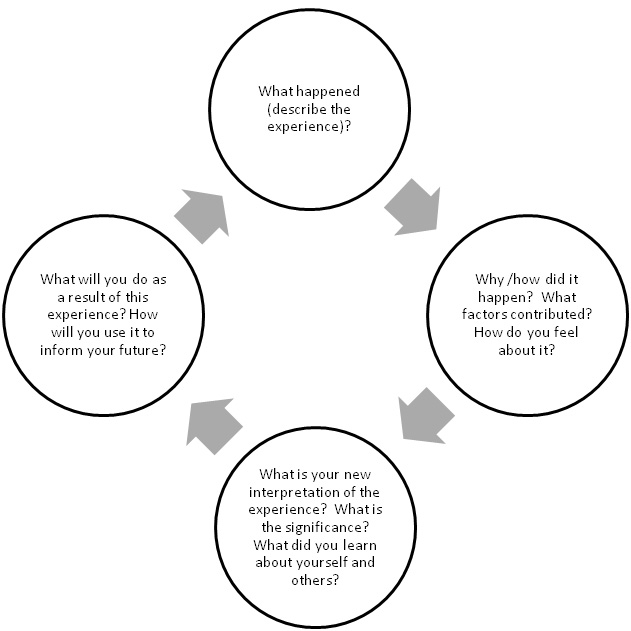
Raewyn Tudor from Ara presents on developing critical thinking, critical reflection competencies with social work students. Prepares student for role of social workers to challenge assumptions and social structures that discriminate and oppress and bring around meaningful personal and social change. Offered definition of critical reflection as a purposeful activity for considering and making changes, improvements to practice, knowledge and meanings. Introduced Stephen Brookfield's critical reflection model. Described how this is achieved through group projects and how assessed. Collaborative teaching requires high capability so PD essential. Shared learning of tutors from the process. 

Last up, Steve Tomsett from Ara on flipped classrooms as deployed helping engineering students learning concepts which are maths based. Provided background on the evolution of his current practice. Explained how flip learning should work and shared what worked and what did not work. Summarised the reflective process of Lines and dots. Line was the wider context and dots are the essential mechanics required to be learnt to progress in class. Dots are provided before class. Lines then take place to apply the dots into the context. Not just the maths but adding the why into the how. Able to use extra time to carry out authentic data collection and analysis to apply the concepts learnt. teL only useful to add value and enrich. 

In the other stream on school to tertiary transition. We have Katrina Fisher and Silvia Santos from Ara presenting as well. Katrina on 'learning barista skills through on-line learning' and Silvia with 'using tablets to assist with maths skills'. 

Dr. Peter Coolbear, Ako Aotearoa Director, closes a busy but well attended event. Peter reminded us internationally tertiary education is in flux. Changes in technology mean learning no longer has to be anchored in institutions. Cost wall being hit with regards to massification of education. Cost constrains now need to be rethought. Diversity of learners increased. Social expectations and returns on tertiary education also shifting. Tertiary education still needs to meet the needs of the future with uncertain parameters. Provided background on rationale for return on investment on tertiary education. D

Lots of variety in the presentation this afternoon but also commonalities between what constitutes good teaching to encourage learning. Active, authentic, constructive, collaborative. 

Monday, September 09, 2013

Spotlight on Tertiary teaching and learning from 14th June - videos now available

Videos of most of the presentations from the June 14th event  are now avaiable on the Ako Aotearoa website via the event page.

Good opportunity for me to catch up on the presentations made in the 'learning centred teaching' stream which I missed out on as I was chairing and presenting in the other parallel stream on ' technology enhanced learning'. A good resource as each video encapsulates the on-going work made by educators to improve learning for students.

Monday, June 17, 2013

Spotlight on Tertiary Teaching and Learning - 14th June

Presented and assisted with the organisation of the Spotlight on Tertiary Teaching and Learning event organised by Ako Aotearoa and the Ako Aotearoa Academy. A gathering of 90 tertiary educators from across the tertiary sector, mostly Christchurch but presenters from Dunedin and attendees from Nelson as well. Ako Aotearoa Academy members form a core of presenters with Supreme award winners, Dr. Rhiannon Braund, Selene Mize and myself and award winnners Eric Pawson and Stephen Hickson.

The Friday afternoon event was held at University of Canterbury (UC) with nibbles and drinks provided through Christchurch Polytechnic Institute of Technology (CPIT) and catering industry sponsorship.

The event opens with a mihi and short welcome from Bridget O'Regan, southern hub manager and then brief welcome from Dr. Rhiannon Braund, 2012 Prime Minister 's award for tertiary teaching excellence. Rhiannon spoke about her passion for teaching and how it is important to share that passion with students and help them gain an interest in their work as well. 

The first stream is on student engagement, chaired by Jennifer Leahy.

First up, CPIT's teacher education programme leader, Lyn Williams on 'embedding teacher professional development as business as usual'. Connecting things new teachers learn while learning how to teach. Teacher education is not at the centre of the new teachers' universe, they are workplace learners, with many challenges associated with changing from one occupational culture to another. So teacher education is making sense of current understanding of how learning occurs and how they as teachers can help students learn. Need to recognize the diversity and multi literacies in various disciplines and how to help new teachers learn how to be learner centered teachers. Agency - access and negotiation by individuals and the work environment. What are more experienced teachers doing to assist new teachers to ensure they are able to apply their agency in a supportive work environment. 

Jen Halliday Lincoln University on 'engaging students in active communication'. Modelling an engaging presentation On how to involve students and how to elicit responses from students. To educate is to draw out. She then went through the structure do the presentation - to grab attention, use what learners already know and then make it participative. 

Then, Dr. Richard Manning ,UC with presentation with 'place based education- pathways to partnership'. Presented on why a placed based education course about the Treaty? Cultural differences between Pakeha and Maori means that both do not have similar understanding of the Treaty and why the treaty negotiations took place. Most schools still have a Eurocentric focus and therefore NZ young people not exposed to NZ history from both sides of the story. Using place as a starter for both cultures to share the history and understand each others perspective.

Dr. Rhiannon Braund presents on 'beyond dispensing knowledge: how to engage pharmacists in training'. How do we view teaching? Empty containers, pre- formulation or ready to use. Some students find ways to take shortcuts through Flip learning requirements. How do we make sure students do the work before workshops? Use peer activities as other students are less tolerant of students who do not prepare. Having to answer to peers is more effective.

John Morgan presents CPIT work on 'innovative teaching style for kinesthetic learners'. Changing original programme to emphasize the learning of practical skills. Literacy, numeracy and theory concepts were embedded and integrated around practical workshop practice. Projects used to provide a focus for students learning.The presentation is based around the manufacturing team's IGNITE project.

After a short break, two streams commence. Professor Eric Pawson chairs and presents in the learner centered learning stream with 6 presentations.  

I present on 'situated technology enhanced learning' and chair the second stream on technology enhanced learning. Brief notes from presentations in TEL include:

Jocelyn Howard from UC takes us through 'online polling and collaborative note taking using google docs'. Used Socratic to demonstrate how online polling can be used to engage students, have a sense of level of understanding of a topic and review learning. 

Stephen Hickson, UC, shares some things to do with iPads. Presented on how to capture worked problems as per using overhead projector. Using a special scribe from adonit.  Notes are then emailed to self and posted on moodle for students to access.  Also introduced a few other useful apps. App hits, speak up and good notes.

Mary Kensington, Lorna Davies, Julie Richards and Rea Daellenbach share CPIT midwifery section work on their blended programme with 'birthing a new programme: hearing a new heartbeat'. Provided structure of programme before and after. In blended deliver, there is f2f, online , practice and portfolio. Online with tutorials using adobe connect, learning packages and discussion for which are student led but tutor directed. Important to support the social side of learning. Weekly tutorials have become the most important learning space for student to share, reflect on and review practice.

The official programme ends with short overview by Dr. Peter Coolbear, Ako Aotearoa director and De. Hamish Cochrane, academic director at University of Canterbury. 

Networking session closes the event.

All in a well-attended event, moved along by short, sharp 15 minute presentations. The majority of attendees were from the Adult and community education (ACE) and private tertiary education (PTE) sector, signalling a need for professional development events for these two sectors.The Academy will need to encourage and support more applicants from these two sectors to apply for the tertiary teaching awards to widen it's representation and support of all tertiary educators.

Tuesday, April 13, 2010

Spotlight on Tertiary teaching in Canterbury and beyond - some presentations now available

Our ever efficient Ako Aotearoa Academy manager, Helen Dobson has now put up various presentations and submissions generated at the Ako Akotearoa Academy / Ako Aotearoa Southern Hub event in Christchurch held on 26th March.

Especially fortuious is that all the presentations which I missed in the conconcurrent sessions are now available :) Helen has also collated the feedback from the event for the organisers, the Canterbury chapter of the Ako Aotearoa Academy, to assess.  The feedback was overwhelmingly in support of the event, so it looks like there is consensus for another similar event next year.

Monday, March 29, 2010

Ako Aotearoa - Spotlight on tertiary teaching in Canterbury & beyond

The Ako Aotearoa Academy (Canterbury chapter) organised a 'Spotlight on Tertiary Teaching' funded by Ako Aotearoa and Ako Aotearoa Southern Hub.  Over 160 tertiary educators from Universities (Canterbury (UC), Lincoln & Otago), Polytechs (CPIT, Nelson, Southland) and various provide providers attended the event.

Ako Aotearoa was also represented by Dr. Peter Coolbear & the academy represented by president, Donna Buckingham.  The event was fully sponsored so there were no registration fees, which assisted many part-time educators and teachers working in private training institutions to attend.  In all, a grand celebration of the diversity of educational offerings available in NZ plus a showcase of educator's student centred teaching philosopies.The event was opend with a welcome from Ngahiwi Apanui (Kaijautu Maori for Ako Aotearoa) & Dr. Juliet Gerard representing the organising committee.

Dr. Tim Bell and Dr. Angus McIntosh convened the first session which was a dual stream session of presentations.  I attended the sessions in Stream A which included Derek Chirnside's entertaining presentation on Vygotsky: A physicist encounters the world of educational research. Dr. Ruth Zanker from CPIT on immersive learning environments for Broadcasting communications students, Dr. Ben Kennedy from UC using clickers & presenting on Carl Weiman's science education iniative, Haani Huata's (CPIT) wonderful presentation on using song and dance to 'transmit' intergenerational knowledge and Carol Acheson (Otago) on academic skill development for mature post-graduate students.

In the other stream, there were presentations from Dr. Niki Davis (UC) on using blended learning, Dr. Catherine Moran (UC) on tertiary teaching from classroom to community, John Grant on tertiary education opportunities for adults with intellectual disabilities, Dr. Glen Koorey (UC) on engaging the engineering industry as students and teachers  and Dr. Simon Kingham (UC) on service-leanring.

Dale Sheehan and myself then faciitated a sesssion on 'lifting your game' which focused on unpacking individual teachers' philosophies on teaching.  Dr. Marjorie Manthei (retired from CPIT) provided the background.  Four panel members provided examples of their teaching philosophies.  They were Dr. Tim Wilkinson (UC) on teaching doctors, Phil Healey (tutor of the year for the NZ private education providers association) presented on teaching digital literacy skills, Te Rita Paphesh presented a good overview of Maori pedagogy and Stephen Byers (CPIT) on teaching level 2 students on a pre-trade electrical industry supply programme. The audience then worked in groups to distill and discuss their own philosophies.

The last session was a panel discussion brought together by Dr. Eric Pawson & Dr. Roger Nokes. Each panel member responded to a question which would then be discussed by the audience.  A summary of responses will be collated & sent to CEOs of the institutions represented by the participants to the event.  Anna Boyd (student at UC) responded to the question ' what should a student-centred institution look like?', Alan Walker (principal of Early Childhood School) responded to the question 'what would you do to enhance teaching with a large financial windfall!' Dr. Jan Cameron (UC) presented a thought provoking response to 'How should we incentivise teaching?' & Mary Kensington (CPIT) responded to the question "what do you do to lift your game as a teacher' with examples of how midwifery had to work to incorporate distance/flexible delivery into their programme.

The event closed with a short summary from Dr. Peter Coolbear and a farewell song from Haani Huata.

All in, informal feedback indicate there is a space for this event on the tertiary teachers' calendar for next year (and for as long as funding is available).  I was especially encouraged by the many educators from private providers who attended. Many are keen to network and events like this provide a good opportunity for people from the diverse sectors of tertiary education to share ideas, challenges and solutions.